
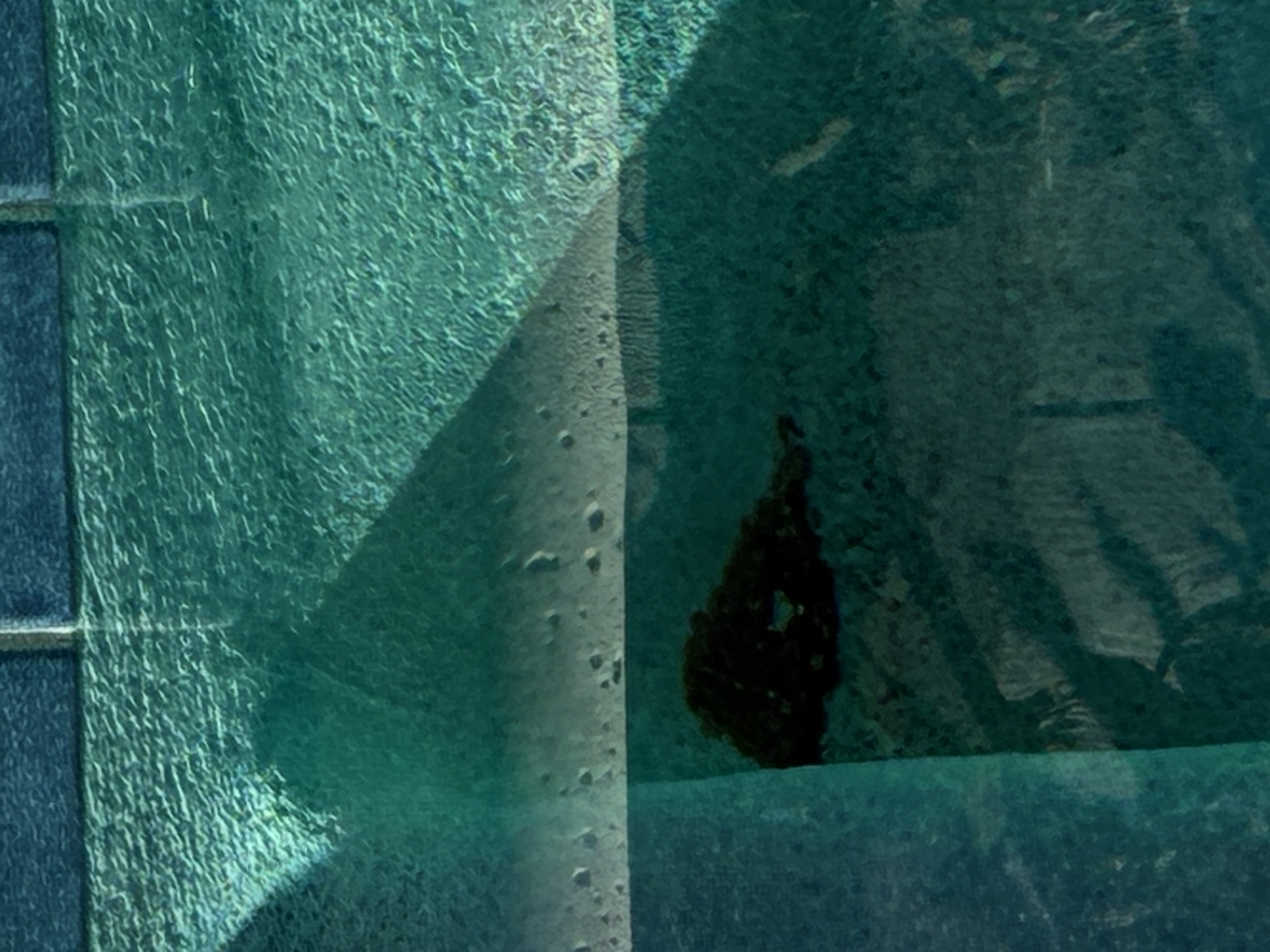

Imagine owning a pool that looks clean… but is quietly dissolving itself.
That was the reality for a homeowner who called us out after noticing something that didn’t make sense: the pool water looked clear, but the surface felt rough, dull, and permanently worn. Even the stainless steel handrail was beginning to show rust.
At first glance, it looked like “old plaster.”
But when we tested the chemistry, the real cause became obvious.
This wasn’t age.
This was years of aggressive water — and a textbook case of what happens when the Langelier Saturation Index (LSI)is ignored.
Results at a Glance
This project proved that surface damage isn’t always caused by time — it’s often caused by chemistry.
Water Balance: Restored from highly corrosive to calcium-stable.
Protection: Prevented continued etching and surface loss.
Purification: RO used to eliminate chemical baggage and reset the pool.
Education: Homeowner trained to manage water using the LSI, not guesswork.
Long-Term Savings: Reduced future chemical demand and prevented premature resurfacing.
The Hidden Destroyer: Low pH, Low Alkalinity, High CYA
When we tested the pool water, the results explained everything:
- pH: 7.0
- Total Alkalinity: 35 ppm
- Cyanuric Acid (CYA): 220 ppm
- Calcium Hardness: 1000 ppm
- TDS: 2143 ppm
- Temp: 63 F
- LSI: Beyond -2.28 (Extremely aggressive)
- Sanitizer method: Trichlor tablets
On paper, the pool was being “maintained.”
In reality, the water was slowly becoming acidic, unstable, and corrosive.
Trichlor tabs are convenient, but they come with two unavoidable side effects:
- They continually lower pH
- They continually raise CYA
And once CYA climbs high enough, the pool becomes chemically trapped — requiring more product, more correction, and more guesswork to stay clear.
That cycle can run for months or years.
And in this case, it did.
The Science: Why the LSI Predicts the Future of a Pool
Most pool owners are taught to watch three numbers:
- pH
- alkalinity
- chlorine
But the pool doesn’t care about “normal ranges.”
The pool cares about one thing:
Calcium stability.
That’s what the Langelier Saturation Index (LSI) measures.
LSI takes multiple water parameters and predicts whether the water will behave in one of two ways:
- Scale-forming (it deposits calcium)
- Aggressive (it dissolves calcium)
And here’s the key detail most people miss:
If the LSI is negative, the water becomes hungry.
It doesn’t just attack calcium in the water.
It attacks calcium in the pool itself.
Plaster, grout, tile lines, and even metal components become a target.
The Evidence: When Water Eats the Pool
The homeowner didn’t call because the pool was green.
They called because the pool was being physically damaged.
The symptoms matched exactly what aggressive water causes over time:
Surface Etching
The plaster was heavily pitted, rough to the touch, and visibly worn. This wasn’t normal aging — it was chemical erosion.
Stainless Steel Corrosion
The handrail showed rust staining and surface breakdown. Stainless is highly resistant, but not invincible. Aggressive water strips protective oxide layers and accelerates corrosion.
Permanent Texture Change
Even after balancing the water, the damage remained. Once plaster is etched, it cannot be “undone” with chemicals — only prevented from getting worse.
The Root Cause: Chemistry That Looked Normal to the Owner
The homeowner thought the pool was being cared for properly because:
- chlorine was always present
- tabs were always in the floater
- the water stayed mostly clear
But the chemistry told the truth.
With pH at 7.0 and alkalinity at 40 ppm, the water had likely been living in a chronically negative LSI state.
That means for an extended period of time, the pool water was not balanced.
It was corrosive by design.
And with CYA at 220, the pool had accumulated years of chemical buildup that made proper sanitation and stability nearly impossible without a reset.
The Solution: Reverse Osmosis Purification + Chemistry That Makes Sense
Balancing the water alone would not solve this problem.
Because the water wasn’t just “out of range.”
It was chemically overloaded.
So rather than drain and refill blindly, we deployed our Reverse Osmosis purification system to remove the contaminants that were locking the pool into failure:
- excess cyanuric acid
- dissolved solids
- accumulated byproducts from years of tablet use
- excess salts and chemical residue
Reverse Osmosis gave the pool what it truly needed:
A clean slate.
The Strategy: Using LSI to Stop the Damage Permanently
Once purification was complete, the pool could finally be managed correctly.
This is where the LSI becomes the homeowner’s most powerful tool.
Instead of chasing numbers individually, we rebuilt the chemistry with one goal:
Keep calcium stable and the LSI slightly positive or neutral.
Because when the LSI is properly controlled:
- plaster stays protected
- grout stays intact
- metals resist corrosion
- calcium remains suspended instead of deposited or dissolved
This is the difference between water that simply “looks clear” and water that is actually safe for the pool.
Why RO + LSI-Based Care is the Best Long-Term Protection
This case is the perfect example of why pool water must be treated like a system — not a checklist.
Reverse Osmosis removes the chemical baggage.
LSI-based maintenance prevents the problem from ever returning.
One without the other is incomplete.
RO restores the water.
LSI protects the investment.
Because if you maintain a pool with a negative LSI long enough, the surface doesn’t just degrade…
it disappears.
Final Takeaway: Clear Water Can Still Be Destructive
This pool looked clean, but the chemistry was quietly doing damage every day.
And that’s the danger.
Most pool owners don’t know the pool can be dissolving while the water still looks “fine.”
This project was a reminder of a simple truth:
A pool doesn’t fail from lack of chlorine.
It fails from unstable water.
And the best way to prevent that is with two things:
- Purified water through Reverse Osmosis
- Long-term informed care guided by the LSI
That’s how you protect plaster, tile, equipment, and the entire investment for the long haul.