
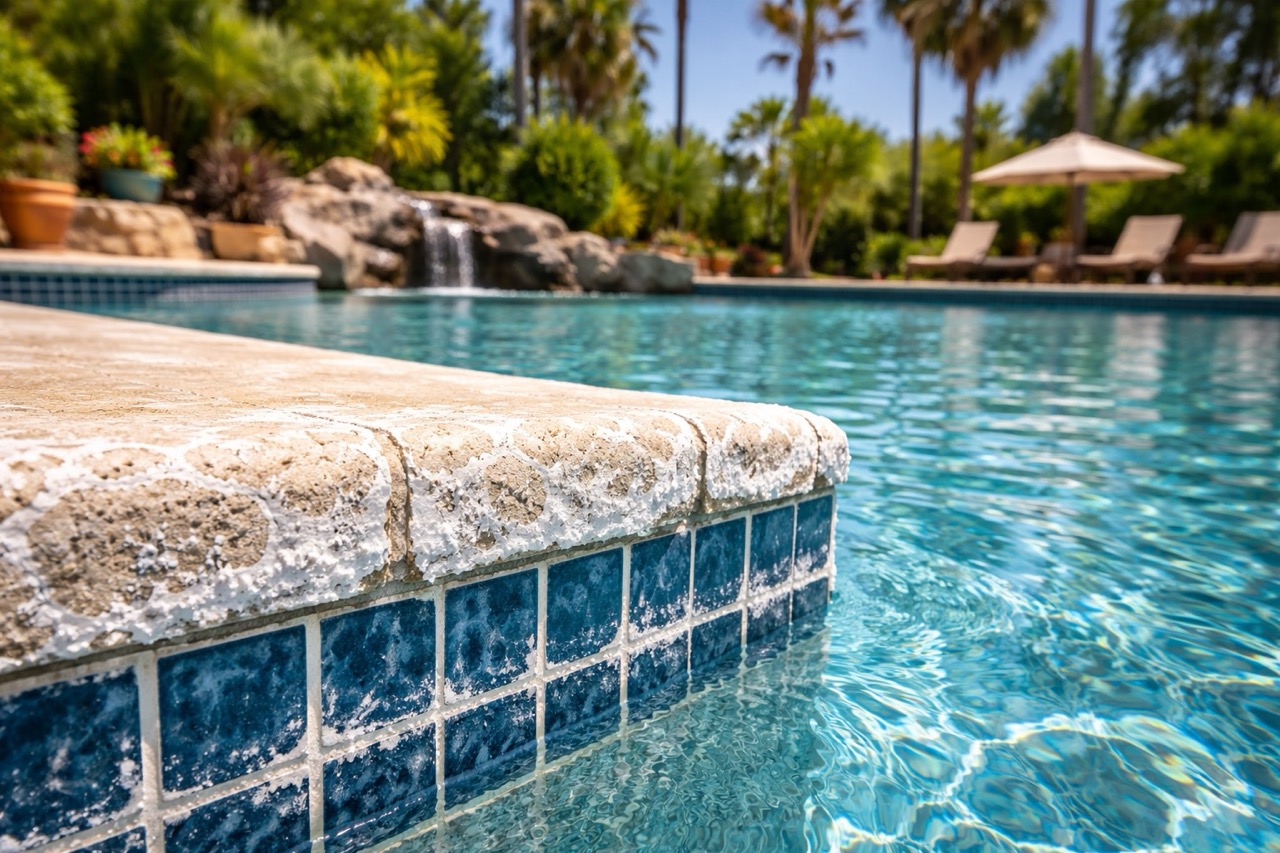

You step outside, the water looks great, the sun is hitting just right… and then you see it.
That chalky white ring hugging your tile line.
At first, it looks like something that should wipe right off. You grab a brush, give it a shot… and nothing. It’s stubborn. It’s rough. And it’s not going anywhere.
So what is it?
Let’s break it down.
It’s Not Dirt. It’s Chemistry
That white scale on your pool tile isn’t dirt or algae. It’s calcium buildup, and it’s one of the most common issues pool owners face.
Here’s what’s happening behind the scenes:
Your pool water contains dissolved minerals, especially calcium. When conditions are right, that calcium comes out of the water and sticks to your tile.
Three things drive this process:
- High calcium levels in your water
- Imbalanced pH or alkalinity
- Evaporation, especially in hot climates like California
As water evaporates, the minerals don’t disappear with it. They get left behind, slowly building layer after layer along your waterline.
That’s why you almost always see scale forming right where the water meets the tile.
Not All Scale Is Created Equal
Here’s where it gets interesting and where most people get tripped up.
There are actually two main types of calcium scale:
1. Calcium Carbonate
- White, chalky, flaky
- Easier to remove
- Often feels like a powdery crust
2. Calcium Silicate
- Grayish white, harder, almost glass like
- Much more stubborn
- Forms over a longer period of imbalance
The difference matters because what works for one doesn’t always work for the other.
If you’ve ever scrubbed for hours with little progress, chances are you’re dealing with the tougher version.
Why It Keeps Coming Back
Here’s the truth most pool owners don’t hear:
Cleaning the tile doesn’t fix the problem.
It just removes the symptom.
If your water chemistry stays out of balance, the scale will come back. Every time.
Think of it like this:
- Your water becomes overloaded with calcium
- It can’t hold it anymore
- So it deposits it on your tile, your equipment, your surfaces
In hot regions, this happens even faster because heat and evaporation accelerate the process.
That’s why you might feel like you’re constantly fighting the same battle.
The Hidden Cost of Ignoring It
Most people think white scale is just cosmetic. It’s not.
Over time, calcium buildup can:
- Damage tile and grout
- Clog filters and reduce efficiency
- Impact heaters and plumbing
- Create rough surfaces that irritate skin
Left untreated, it turns into a much bigger and more expensive problem than just a cloudy waterline.
The Right Way to Handle It
There are really two parts to solving scale:
1. Remove What’s Already There
Depending on the severity, this can involve:
- Professional tile cleaning
- Bead blasting
- Specialized calcium removal treatments
2. Fix the Source
This is the part that actually matters long term:
- Balance your water chemistry
- Control calcium hardness
- Manage evaporation and refill cycles
If you skip this step, you’re just resetting the clock.
A Better Way Forward
At California Pool Co., we look at scale differently.
We don’t just clean it.
We solve the reason it showed up in the first place.
Because once your water is properly treated and balanced, something interesting happens.
The scale stops forming.
And your pool finally stays the way it’s supposed to look. Clean, sharp, and effortless.
Final Thought
That white ring on your tile isn’t random. It’s your pool telling you something is off.
The good news?
Once you understand it, it’s completely fixable.
And once you fix it the right way, you don’t have to keep fighting it.
If your pool is starting to show signs of scale, or if you’re tired of scrubbing the same line over and over again, it might be time to address the root of the problem, not just the surface.